

There’s a Tick on My Child—Now What?

Identifying Tick Bites on a Child
A tick bite on a child can be easy to miss. Your child walks by, and you see a spot that you don’t recognize. Is that a new freckle? Oh no. It has legs.
April through September is peak tick season in Virginia. Of all the species of ticks in Virginia, only 3 species bite humans and carry diseases. The lone star tick, the American dog tick, and the blacklegged (deer) tick. They look different as they grow, and only a small percentage carries bacteria that can cause illnesses.
Types of Ticks
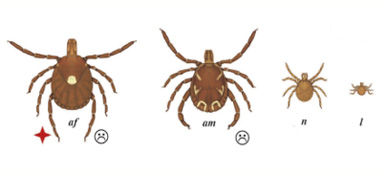
Lone Star Tick
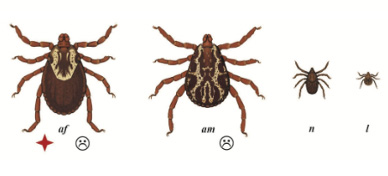
American Dog Tick
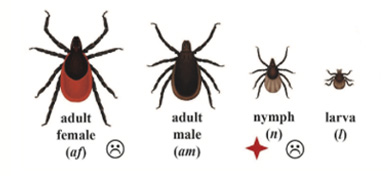
Blacklegged Tick
Your child has an attached tick. Now what?
If you found a tick on your child, prompt and careful removal is key. Here are some helpful tips for tick removal at home.
- Use a tweezer to grab the tick as close to the skin as possible.
- Pull upwards with steady, even pressure until the tick releases.
- Clean the bite area with soap and water.
- Wash your hands with soap and water.
- Take a picture or save the tick in a plastic baggie to help identify the tick. Sticking the tick between two pieces of tape can help secure it.
** DO NOT use petroleum jelly, nail polish, mayo, or other substances to remove the tick. This can stress the tick and cause it to pass infected fluids into the skin.
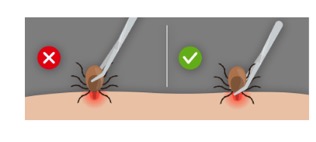
Oh no! The head is stuck.
Despite your best efforts, the tick didn’t release, and now the head of the tick is still embedded in your child’s skin. Don’t panic! It’s important to know that the head of a tick cannot transmit disease. At this point, that little black fleck can be treated like a little splinter. It’s not recommended to disrupt the skin further by digging out any remaining pieces. Your child’s body will break down and push out any remaining particles.
Does my child need to be evaluated by a medical professional?
We are always happy to evaluate your child and give guidance in person. The only tick bite that might need a prophylactic antibiotic is the blacklegged (deer) tick. However, only certain bites meet high-risk criteria. The tick needs to be attached for at least 36 hours (be full/engorged) and be a confirmed deer tick. If the tick can’t be identified, isn’t a deer tick, or is otherwise considered low risk, the CDC recommends monitoring the bite area for 30 days for symptoms. Typical bug bite care is all that’s needed!
Now What?
Most tick bites heal and resolve on their own without any complications. Keep a close eye on your child for the 30 days following a tick bite. A little hydrocortisone cream can help with itching from that little bite that you can expect to hang around for a few weeks.
If your child develops a fever, joint pain, rash, or other flu-like symptoms, have them evaluated by a medical provider and make sure to mention they recently had a tick bite.
An ounce of prevention is worth a pound of cure!
Check those kiddos for creepy crawlies after being outside. A quick survey of the body can save your child from illness. Remember, removing a tick within a few hours of a bite greatly reduces the risk of disease transmission.
Remember to check through the hair, around the ears, under the arms, in the belly button, around the waist, between the legs, and behind the knees. Insect repellent containing less than 30% DEET can be used in children older than 2 months. Tuck your pant legs into your socks for the best practice of tick avoidance.
Always read the label to make sure the ingredients are safe for your child. All-natural sprays often include essential oils that are not safe for children under 3 years of age. Also, make sure to use tick and flea prevention for your pets to prevent them from bringing pests into the home.
We are here for your child’s urgent health needs!
About the Authors:
Sarah Barr Horan, MSN, CPNP-PC
Sarah was born and raised in Charlottesville, VA, and graduated from the College of William and Mary with a Bachelor of Science degree in kinesiology and psychology. After years of involvement with a camp for children with special health needs, she followed her dreams to Nashville, where she received a Master of Science in Nursing degree from Vanderbilt University. Sarah joined KidMed in October 2017 and is married with two children.
Melanie Reed, MSN, CPNP
Melanie is a pediatric nurse practitioner who has been with KidMed since November 2010. She earned an undergraduate degree from James Madison University and Master’s in Nursing with a concentration in Child Health from Virginia Commonwealth University. She is board-certified by the Pediatric Nursing Certification Board. Outside of work, she enjoys spending time with her husband and three children and currently resides in Chesterfield, VA.
Read More
-
There’s a Tick on My Child—Now What?
Read more: There’s a Tick on My Child—Now What?Identifying Tick Bites on a Child A tick bite on a child can be easy to miss. Your child walks by, and you see…
-
How to Tell if Your Child Actually Has Strep Throat.
Read more: How to Tell if Your Child Actually Has Strep Throat.“Mom, my throat hurts!” Now what? Sore throats are a common complaint we see at KidMed. They make patients of all ages not want…
-

15th Anniversary Brings Big Changes to KidMed Urgent Care
Read more: 15th Anniversary Brings Big Changes to KidMed Urgent CareKidMed Urgent Care celebrates its 15th year with a refreshed brand, core values and brand promise.