

Flu Symptoms in Children: Treatment and When to Seek Care

Flu season typically arrives in Central Virginia in October, but this year, it appears to have shown up a little early and uninvited. We’ve already treated quite a few cases in September at our Richmond and Stafford locations, so we advise families to start preparing now. Getting a flu shot and learning to recognize common symptoms in children will help your family prepare for the flu season ahead.
Why Do Pediatricians Trust KidMed for Flu Treatment?
- Specialized expertise and experience in treating children, from infants to young adults.
- Accurate diagnosis and treatment plan that can include prescribing flu medications like Tamiflu or Xofluza within the first 48 hours of symptom onset.
- If your child is asthmatic, wheezing or having difficulty breathing, KidMed has specialized breathing treatments and in-clinic X-ray capability if the provider needs to check for pneumonia.
- Compassionate care for potentially uncomfortable treatments such as nasal suctioning for the littles who can’t clear their own secretions.
- If your child appears dehydrated and may need intravenous fluids, our providers are experts at administering necessary care in a gentle, calming manner.
- If symptoms were improving at home but began to worsen, our decades of experience solely treating children can provide precise diagnosis and an effective course of action.
- The identification and care for additional manifestations, such as difficulty walking or any other weakness.
What Are Common Flu Symptoms in Children?
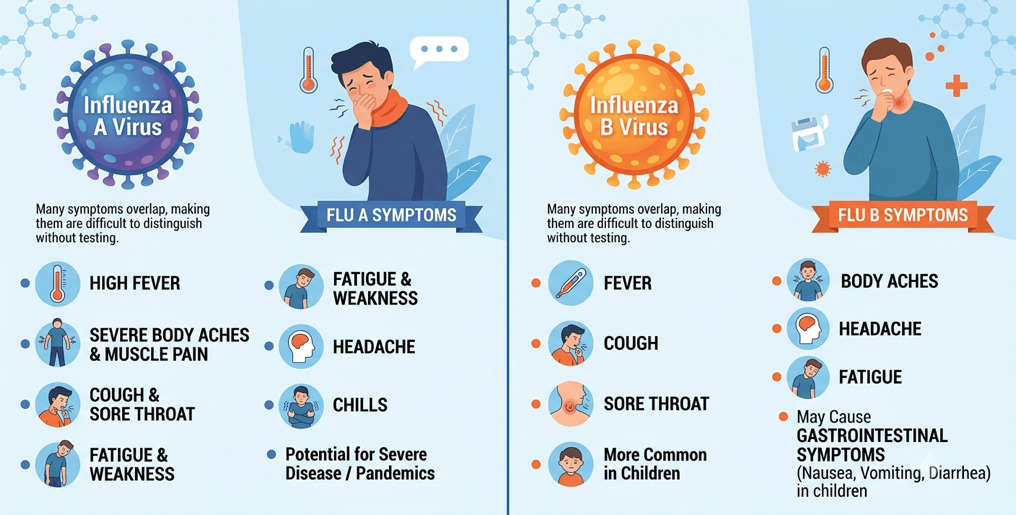
Influenza, also commonly known as “The Flu”, is a contagious respiratory illness caused by a virus. There are 2 virus strains, Influenza A and B, that have similar symptoms. Symptoms often begin suddenly and may include:
- Fever
- Chills
- Cough
- Sore throat
- Runny or stuffy nose
- Headache
- Muscle or body aches
- Tiredness or decreased activity
- Decreased appetite
- Vomiting or diarrhea
How Does Flu Spread?
Influenza spreads easily from person to person through respiratory droplets and particles that are activated when an infected person coughs, sneezes, talks, or breathes.
Your child can help reduce the spread of influenza by:
- Washing hands frequently with soap and water
- Covering coughs and sneezes
- Avoiding sharing cups, utensils, food, or drinks
- Cleaning frequently touched surfaces
- Staying home when feeling sick
How is Flu Diagnosed in Children?
Influenza is diagnosed using clinical symptoms of the child and confirmatory testing with a simple nasal swab. KidMed runs a highly accurate test in-clinic that detects influenza A or B with 95% accuracy!
Is There Medication for Flu?
An antiviral medication, such as Oseltamivir (Tamiflu), can be prescribed depending on your child’s age (Anyone as young as 2 weeks!), symptoms, medical history, and how long they have been sick. Tamiflu can be readily sent to your preferred pharmacy when you come visit us at KidMed!
For children who can swallow pills and are over the age of 5, there is the option of starting another anti-viral known as Xofluza. While insurance may not cover this particular medication, we can send a back-up prescription for Tamiflu to hopefully get your child feeling better within the next 48-72 hours!
Antiviral medications work best when started early, particularly within the first 48 hours of symptoms, although they may still be recommended later in certain children depending on past medical history.
When Can a Child Return to School or Daycare After the Flu?
In general, children should return to normal activities when they have been fever-free for at least 24 hours without using fever-reducing medication and are well enough to participate in normal activities.
If your child needs specialized, expert care for illness, injury or ortho, we’re here for you seven days a week.
Walk in or Save Your Spot online.
For the current weekly influenza activity report for Virginia, visit the Virginia Department of Health.
Read More
-
There’s a Tick on My Child—Now What?
Read more: There’s a Tick on My Child—Now What?Identifying Tick Bites on a Child A tick bite on a child can be easy to miss. Your child walks by, and you see…
-
How to Tell if Your Child Actually Has Strep Throat.
Read more: How to Tell if Your Child Actually Has Strep Throat.“Mom, my throat hurts!” Now what? Sore throats are a common complaint we see at KidMed. They make patients of all ages not want…
-

15th Anniversary Brings Big Changes to KidMed Urgent Care
Read more: 15th Anniversary Brings Big Changes to KidMed Urgent CareKidMed Urgent Care celebrates its 15th year with a refreshed brand, core values and brand promise.